Wars

War is the most dangerous part of the Lands system.

Unlike ordinary PvP, Nation wars put money and claimed territory at stake. They are deliberately restricted to weekends, give defenders advance warning, and require defenders to be present before their territory can be captured.

Wars on Thumpstone take place between Nations. Individual settlements cannot declare war on one another.

When Do Wars Happen?

Wars are designed as Saturday events.

Declarations can only be made on Friday evening, followed by a 24-hour preparation period.

A war then begins at approximately the same time on Saturday and can last for a maximum of 6 hours.

Because the server clock uses UTC, the exact UK times depend on daylight saving:

Winter (GMT)Summer (BST)
DeclarationsFriday 18:00–20:00Friday 19:00–21:00
War beginsSaturday 18:00–20:00Saturday 19:00–21:00
Latest possible endSunday 02:00Sunday 03:00

Wars can finish much earlier through victory or surrender.

No new wars can be declared during the rest of the week.

Declaring War

A Nation can declare war using:

/wars declare <nation>

War declarations do not require the defending Nation’s agreement.

However, several restrictions prevent established Nations from simply attacking new, inactive or unprepared communities without warning.

War Eligibility

Both Nations must meet minimum requirements before war is possible.

Population

Each side must have at least:

5 trusted players

Age

Both sides must be at least:

14 days old

Finances

The attacker requires at least:

£25,000

The defender requires at least:

£10,000

The Defender Must Be Online

A declaration can only be made while at least one player from the defending side is online.

Combined with the Friday-only declaration window, this ensures that somebody is present to receive the warning.

New-Nation Protection

New Lands and Nations receive a 7-day war shield.

While protected by a war shield, they cannot be attacked.

Additional shields can be granted following wars and surrender.

The Preparation Period

Declaring war does not immediately enable combat or conquest.

There is a:

24-hour preparation period

before fighting begins.

This gives both Nations time to:

  • alert their members
  • prepare equipment
  • stock supplies
  • organise their defence
  • identify vulnerable settlements
  • plan attacks
  • negotiate

The defending Nation can also choose to surrender rather than fight.

Check the status of an upcoming conflict with:

/wars info

Preparing for War

Once war has been declared, both Nations have 24 hours to prepare before fighting begins.

Use this time wisely:

  • alert your Nation members
  • decide which settlements need defending
  • stock food, potions and other supplies
  • organise weapons and armour
  • plan who will attack and who will defend
  • identify vulnerable borders and potential capture points
  • make sure valuable equipment is insured

Insure Your Gear

Death during war works like death anywhere else on Thumpstone: you can lose your equipment.

Before fighting, check your insurance and make sure any valuable gear you intend to use is adequately protected.

Going into a Nation war with expensive uninsured equipment is a significant risk.

War is exactly the kind of situation the insurance system is designed for.

Protection After War

Wars are significant events, so Nations aren’t expected to fight every weekend.

After a completed war, both Nations receive an 8-day war shield.

A Nation that surrenders also receives an 8-day shield.

Because wars can only be declared on Friday, an 8-day shield guarantees that the protected Nation misses the entire following Friday declaration window.

In practice:

Weekend 1: War
Weekend 2: Protected: no war
Weekend 3: Eligible for war again

New Lands and Nations receive 14 days of initial war protection, giving new communities time to establish themselves before becoming involved in warfare.

Before Declaring War

Starting a war should be a serious Nation decision.

Consider:

  • Will enough of your Nation be available on Saturday?
  • Can your member settlements defend themselves?
  • Can your Nation afford the financial consequences of defeat?
  • Can you attack enemy territory while protecting your own?
  • Is the potential territorial gain worth the risk?
  • Could diplomacy achieve the same objective?

A Nation can become extremely powerful through settlement growth, economics, cooperation and progression without ever declaring war.

For Nations that choose conquest, however, victory can literally change the borders of the world.

Surrender & Tribute

When declaring war, the attacker can demand a surrender tribute.

The maximum tribute that can be demanded from the defender is:

25% of the defender’s balance

If the defender accepts the terms and surrenders, the tribute is paid and the war ends without being fought.

The attacking side can surrender too, but doing so costs:

£15,000

War therefore always carries some financial risk.

When War Begins

After the 24-hour preparation period, the war becomes active.

Players belonging to opposing Nations can fight one another and eligible enemy territory can be contested.

Friendly fire between teammates is disabled.

The war lasts until one side wins, somebody surrenders, or the 6-hour maximum duration expires.

Defending Your Settlement

Being part of a Nation does not mean attackers can capture your settlement while everybody who lives there is asleep or offline.

To begin invading a particular Land, at least:

1 member of that settlement must be online.

This applies to the individual settlement being attacked, rather than merely requiring somebody from its wider Nation to be online.

So if Nation A contains five settlements, having somebody online in the capital doesn’t automatically expose all four other settlements to capture.

Logging Out Doesn’t Instantly Stop an Attack

Once the online requirement has been met, logging out doesn’t immediately make the settlement safe.

The invasion remains possible for another:

10 minutes

This prevents deliberately disconnecting the moment an attack begins from being an effective defence.

The intention is simple:

Offline settlements cannot simply be farmed for territory, but logging out isn’t a magic escape button once fighting has begun.

No Teleporting Out of Trouble

Several common teleport commands are blocked while you’re engaged in war.

These include commands such as:

  • /spawn
  • /tpa
  • /warp
  • /pwarp
  • /tpr

Don’t enter a battle assuming you can simply teleport home when things go badly.

Capturing Territory

Wars aren’t decided by PvP alone.

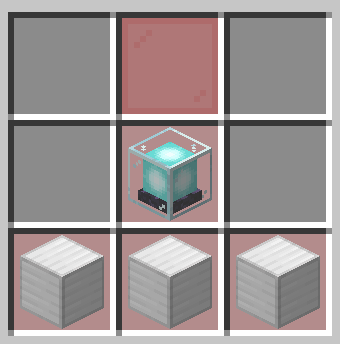
Enemy territory can actually be captured using Capture Flags.

Capture Flags use a Beacon in their crafting recipe. The current recipe can be viewed through the /wars menu.

Only players with the appropriate Nation permissions can place Capture Flags for their side.

Placing a Capture Flag

Capture Flags must be placed on the outskirts of eligible enemy territory.

They can only be placed between:

Y 45 and Y 120

A team can have a maximum of:

2 active Capture Flags

at once.

There is also a:

20-minute cooldown

between flag placements.

Defenders are notified when their territory comes under attack.

Holding the Capture Point

Placing a flag isn’t enough.

Attackers must secure and hold the capture area for:

15 minutes

The capture radius is 1 chunk, so a successful Capture Flag contests a single chunk at a time.

Attackers therefore need to defend their flag while the defending Nation attempts to destroy it or drive them away.

Territory Really Can Change Hands

Capture is not just a scoring mechanic.

A successfully captured chunk is configured to transfer to the attacking side.

War can therefore permanently redraw settlement borders.

Ordinary Lands protection prevents normal griefing and hostile claiming, but joining a Nation means accepting that territory can potentially be lost through legitimate warfare.

War Isn’t Griefing

An active war does not give attackers unrestricted permission to destroy an enemy settlement.

Invaders receive specific wartime permissions rather than complete access to enemy claims.

They can:

  • enter enemy territory
  • attack enemy players
  • pick up items

For mobility during an assault, they can also place and break:

  • ladders
  • vines
  • scaffolding

They do not receive general permission to smash buildings, empty containers or freely place and break ordinary blocks.

The objective is PvP and conquest, not indiscriminate destruction.

War Score

Both combat and territorial objectives contribute points.

ActionPoints
Kill an enemy player1
Successfully capture a flag10
Break an enemy Capture Flag3
Explode an enemy Capture Flag5

Capturing and defending territory is therefore much more valuable than simply hunting individual players.

The Victory Target

The required score scales according to the size of the smaller team.

The target is:

10 points × number of players on the smaller team

with an absolute minimum target of:

150 points

This prevents very small wars from ending after only a handful of kills or captures.

The Six-Hour Limit

A war can last for a maximum of:

6 hours

If neither side reaches the victory target during that time, the Nation with the higher score wins.

If the scores are tied when time expires, the war ends in a draw.

This makes Saturday evening the defined battle period rather than allowing wars to continue throughout an entire day.

The Cost of Defeat

Losing a war has financial consequences as well as potentially losing territory.

Following a decisive victory, the losing side pays:

25% of its balance

to the winner.

This is separate from any voluntary surrender tribute agreed before the war.

War therefore puts both territory and money at risk.

Protection After War

Nations cannot be subjected to endless back-to-back wars.

War shields are granted following conflicts:

  • After surrender: 3 days
  • After a completed war: 5 days for both sides

There is also a 2-day declaration shield associated with qualifying pre-war surrender tribute of at least £5,000.

This gives Nations time to recover before another conflict can begin.

Allies

Allied Nations don’t automatically become additional battlefields.

War permissions apply to the Nations actually participating in the conflict rather than turning every allied settlement into hostile territory.

Allies may matter politically, but a declaration against one Nation isn’t automatically a declaration against everyone it has relations with.

Before Declaring War

Starting a war should be a serious Nation decision.

Consider:

  • Can your Nation afford to lose?
  • Do you have enough active players for Saturday?
  • Can your member settlements defend themselves?
  • Have players prepared equipment they can afford to lose?
  • Can you attack while defending your own territory?
  • Is the potential territorial gain worth the risk?
  • Could diplomacy achieve the same result?

A Nation can become extremely powerful through settlement growth, cooperation, economics and progression without ever declaring war.

For those that choose conquest, however, victory can literally change the borders of the world.

Quick Summary

Friday evening: Wars may be declared
Next 24 hours: Preparation, diplomacy and possible surrender
Saturday evening: War begins
Maximum duration: 6 hours
Capture: One settlement member must initially be online
Logout protection: 10 minutes
Capture time: 15 minutes per flag
Territory: Captured chunks can change ownership
Defeat: Up to 25% financial loss
Afterwards: War shields provide recovery time

Useful Commands

/wars menu: Open the war menu
/wars declare <nation>: Declare war
/wars info: View current or upcoming war information
/wars spawn: Teleport to your team’s war entry point
/wars list: View active wars